01 / The first Reel breakthrough
A first post with a clear audience hypothesis
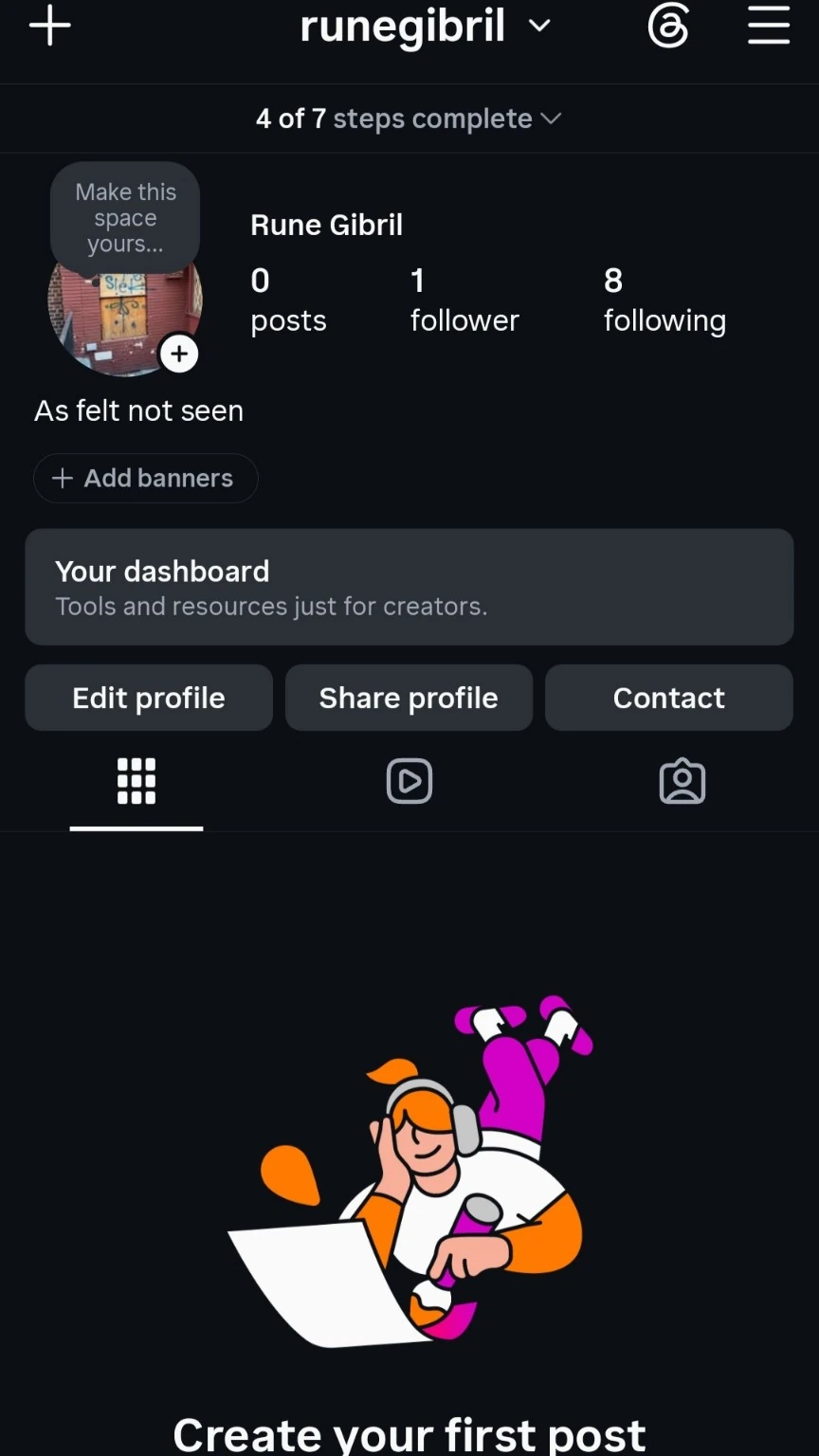
The account's long-term ambition was an audience for a book planned for 2028. For the launch, Project Monet chose a recognisable entry into poetry: Mary Oliver's Wild Geese. That connected the first post to the literary world the new account intended to inhabit.
The reasoning was specific. Someone moved by a poetry reading might also be interested in a literary account. That is an editorial hypothesis, not proof that every viewer would read a future book. The Reel presented an existing poet's work; it was not an excerpt from Rune Gibril's unpublished writing.
02 / The first Reel breakthrough
The launch timeline, without rewriting history
The table preserves authenticated checkpoints from 22 October. The earliest was taken just under 12 hours after publication; the next was roughly 15 hours after publication. Neither should be relabelled as a later milestone.
The 24-hour extract arrived approximately six seconds after the publication anniversary. It is the clearest launch benchmark: 334,944 views, 270,012 accounts reached and 53,411 Instagram-reported interactions.
| Captured | Elapsed | Reel views |
|---|---|---|
| 22 Oct · approximately 08:51 | 11h 51m | 72,509 |
| 22 Oct · approximately 11:51 | 14h 51m | 130,829 |
| 22 Oct · 21:00:19 | 24h + 6s | 334,944 |
03 / The first Reel breakthrough
The first day and the lifetime total answer different questions
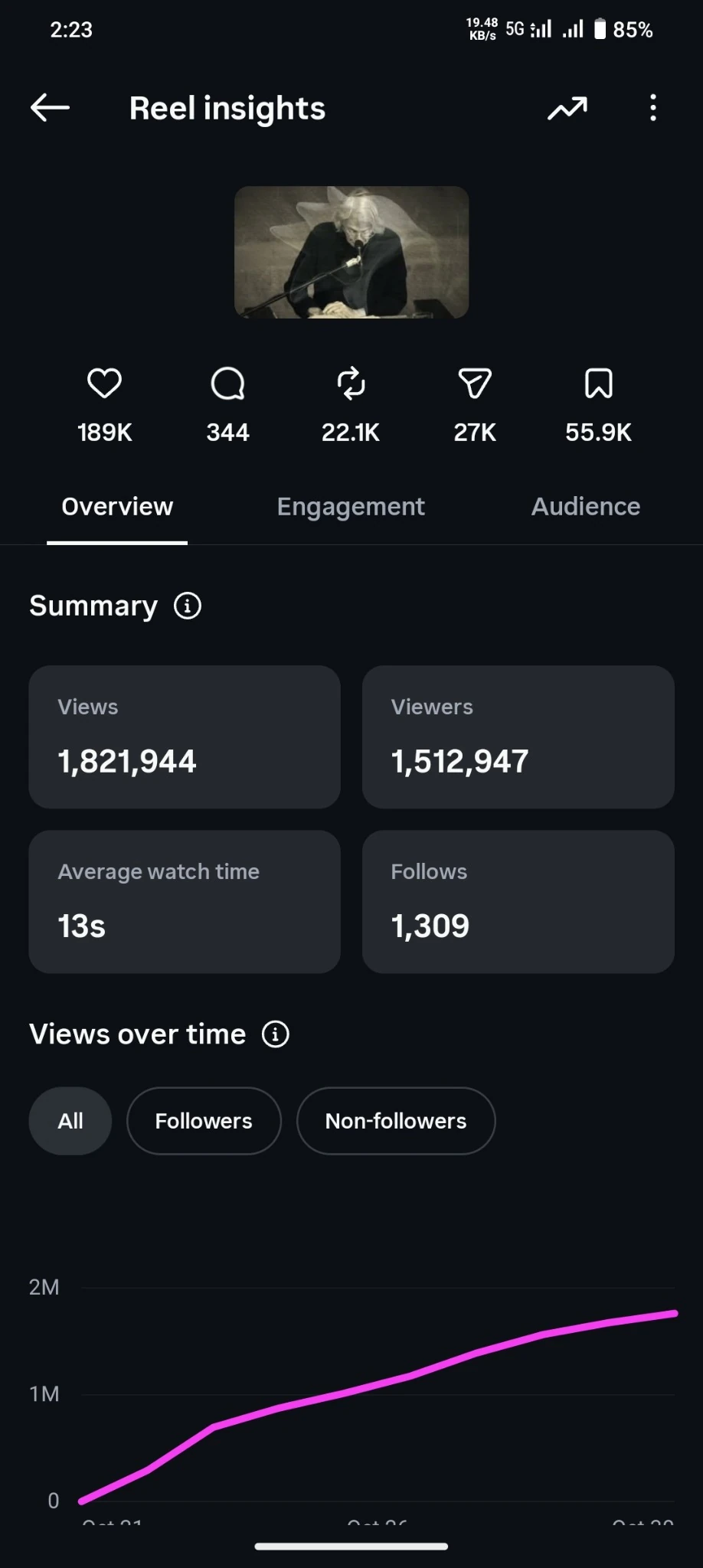
The first-day result shows how quickly a new account's first post travelled. The 31 October Insights screenshot shows its continued distribution: 1,821,944 views, 1,512,947 viewers and 1,309 Reel-attributed follows. A later public counter showed 1,822,621 plays.
The Reel's follow count is a post-attributed metric. It is not the account's net follower growth and should not be added to other Reel follow counts to reconstruct the current follower total. Different reporting windows, attribution and unfollows affect those comparisons.
04 / The first Reel breakthrough
The useful lesson
Preparation gave the launch a reason to exist and a subject to test. The first Reel's performance gave us a signal worth investigating: poetry could travel well beyond the initial following and prompt people to follow the account.
That success did not settle the whole strategy. A new identity still needs people to recognise its own voice. The next tests therefore mattered: could adjacent literature and cultural content attract interest, and could that audience develop a relationship with the account over time? The full case study and Trial Reels report follow that next stage.